
Mother of my Soul ~ Madre de mi Alma
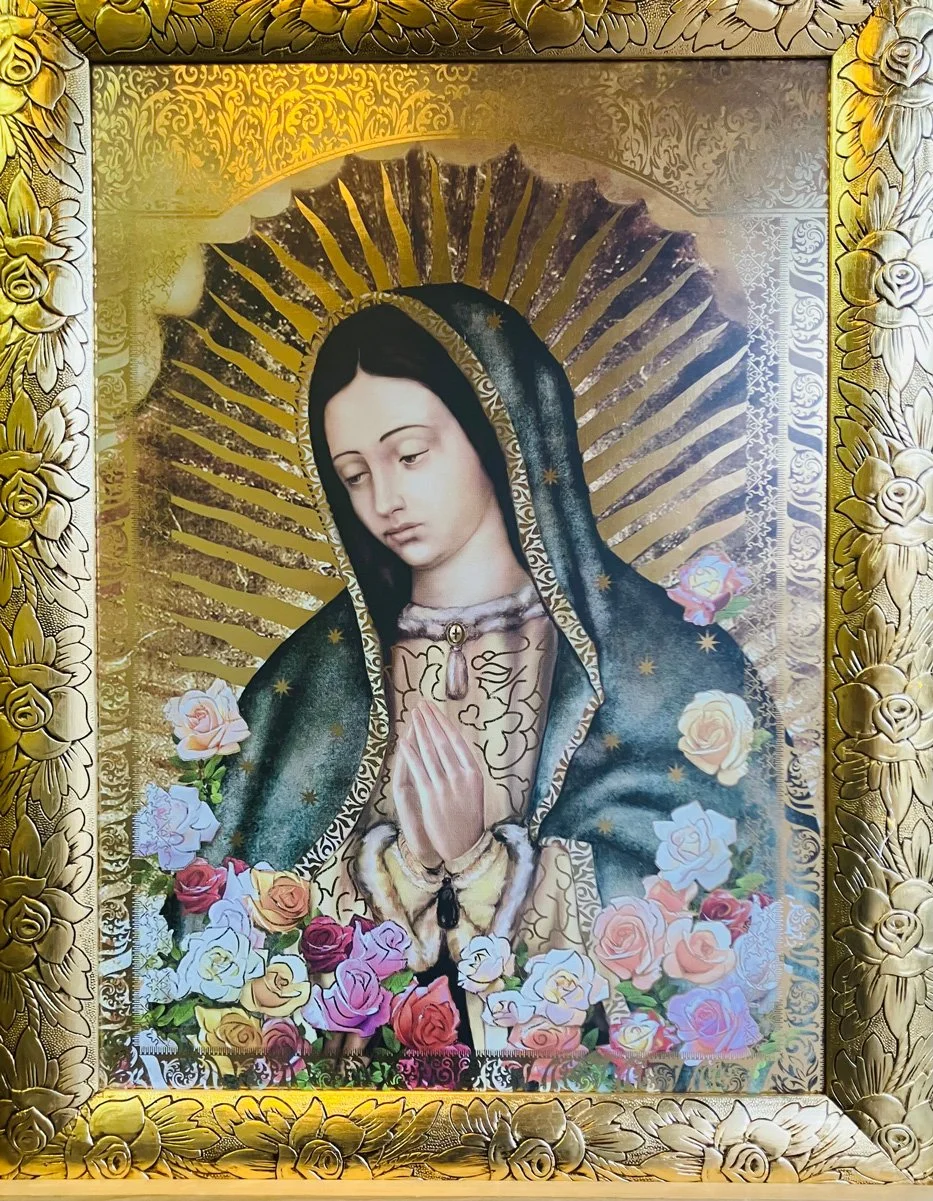
I am not a religious person, nor was I raised in a religious environment. I found my own spiritual path in my early twenties, a journey that has taken many forms. Throughout it all, I have felt a deep, inexplicable connection to sacred feminine figures like Mother Mary (La Virgen María), Mary Magdalene, and la Virgen de Guadalupe. This connection defies simple explanation; it’s a feeling that roots me in the ancient past, to other realms of existence, to something profoundly holy and sacred.
It’s a feeling of having always known her, in the most intimate way. Although formal religions have placed these powerful beings on pedestals, people across cultures, space, and time have reached for her, a testament to a reverence far older than any single creed. Over the years of living in New Mexico and traveling back and forth to Mexico, I’ve felt called to understand not just my connection to her, but also the lineage, land, and memory that shaped her presence in my life.
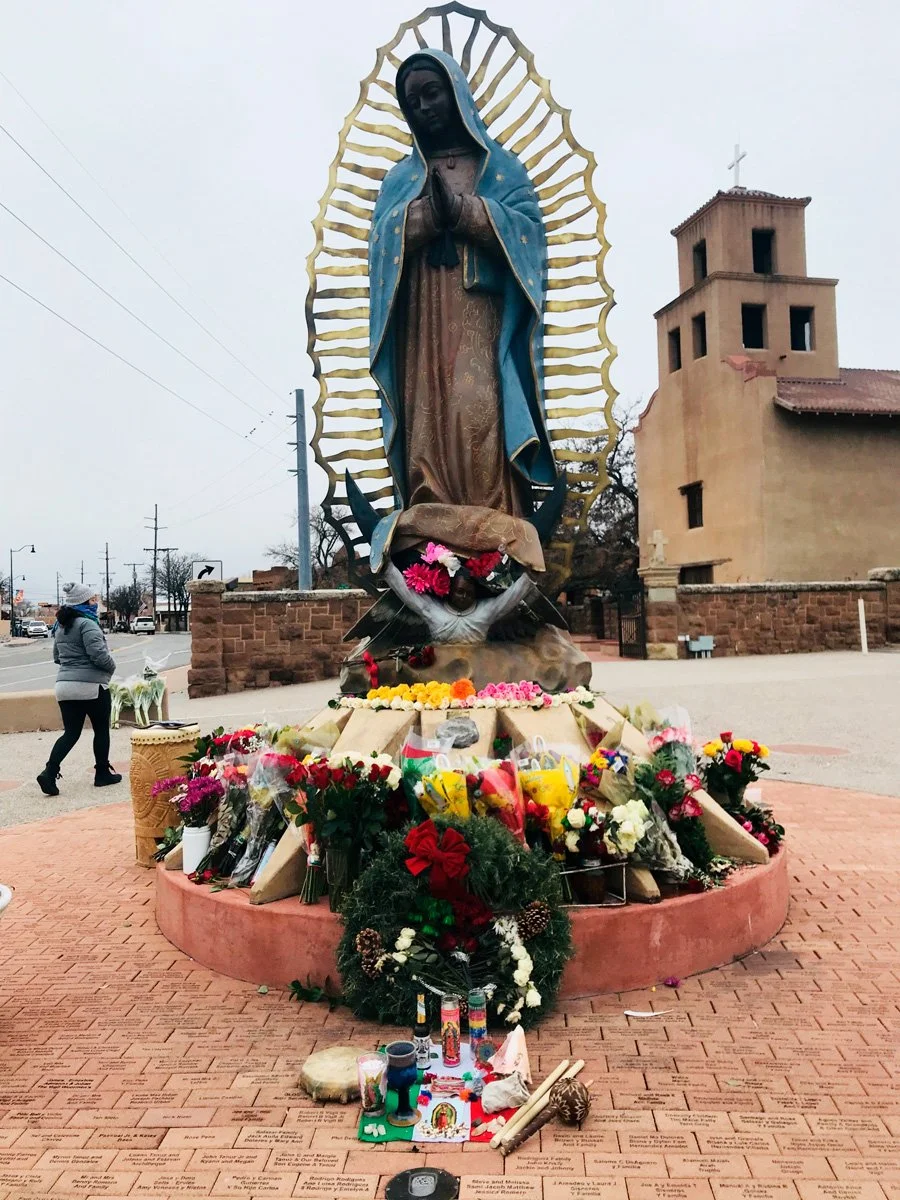
When I arrived in Santa Fe, New Mexico, in 2016, I knew I was in the right place. One of the main streets of the city is Guadalupe Street, anchored by the historic Basilica of Our Lady of Guadalupe. A couple of years later, I would be dancing in its plaza every December 12th for the feast day of our lady with my Danzante group, “Tonantzin de Analco.” But her presence far exceeds the feast day. She is woven into the city's daily fabric: down the smallest side streets, in places you'd never expect, there she is, in vibrant murals, quiet niches, hand-painted statues, and home altars dedicated to La Virgen.
This deep saturation of faith makes significant historical sense.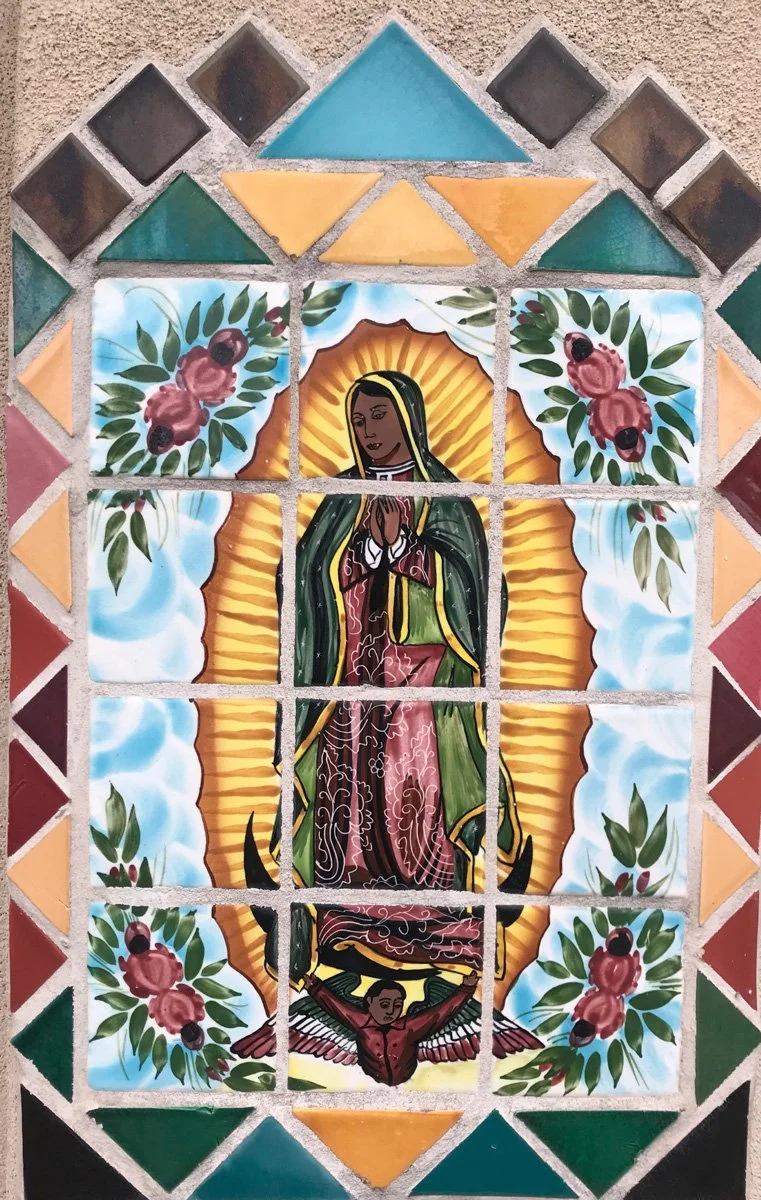
New Mexico, along with California, Arizona, Colorado, and Texas, was once part of Mexico. So, I like to think of New Mexico as “old Mexico.” However, honestly and respectfully discussing this land means looking further back, before any of these names, to honor the original peoples: the Ancestral Puebloans (Anasazi), the Pueblo Nations, the Diné (Navajo), and many others whose spirits live in this soil.
Their history is the first layer, the foundation upon which everything else, the Spanish entradas and the Mexican period, has been built.This land did not become part of the United States until 1848. For centuries before that, it was the northern edge of New Spain, then Mexico. La Virgen de Guadalupe arrived here not as a pilgrim but as the banner of a colonial mission, carried by soldiers, missionaries, and settlers. Her story in New Mexico has always held a duality: a symbol of conquest for some, and for the settlers who clung to her, a divine mother offering protection in a harsh and unfamiliar world.
This complexity is woven into Santa Fe’s history. 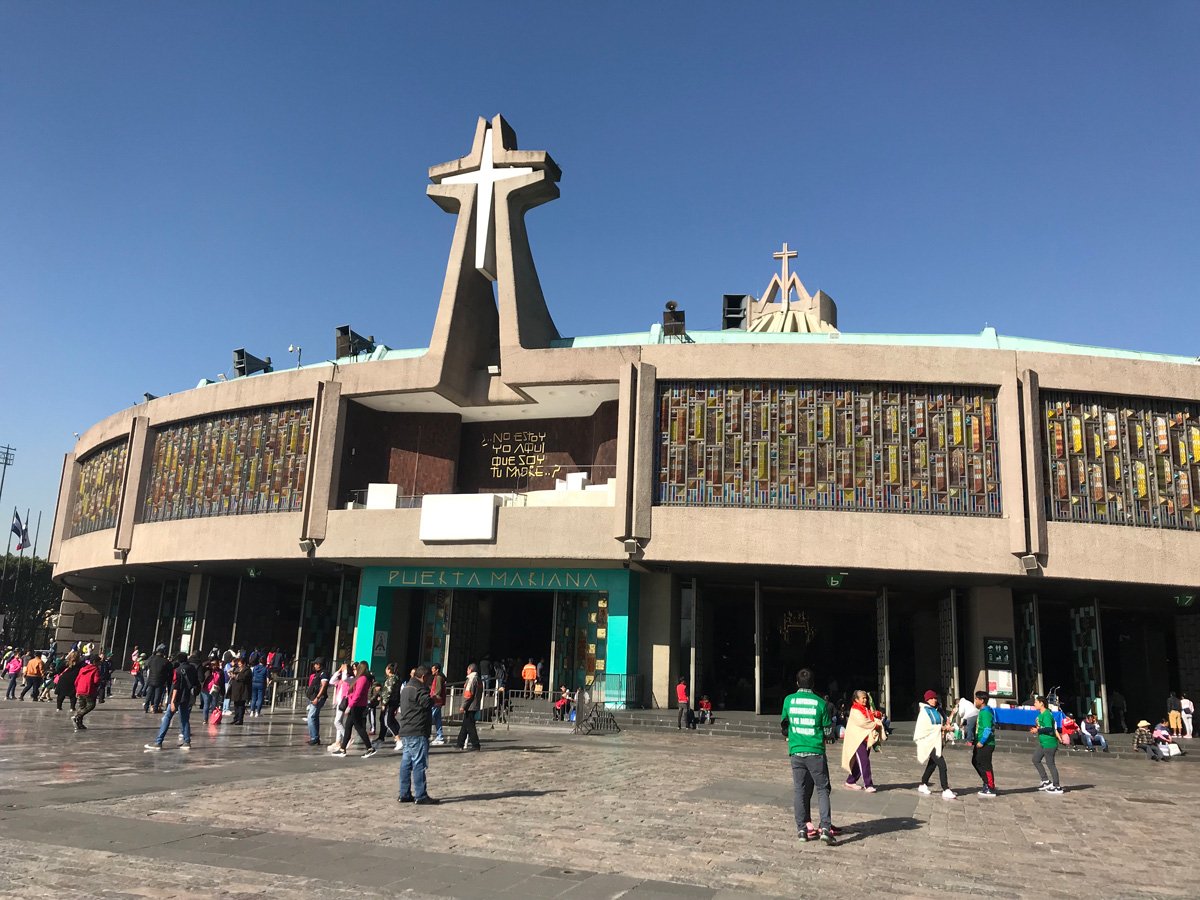
After the Pueblo Revolt of 1680—a powerful act of Indigenous sovereignty- Don Diego de Vargas returned in 1692 with a vow to Guadalupe, naming her the city’s patroness. For the colonists, this return felt miraculous; for the Pueblo peoples, it signified renewed subjugation. And for the generations that followed, she became both a colonial symbol and a beloved mother, protector of crops, healer of the sick, and companion in the hard, quiet life of the high desert.
The murals and home altars I observe today embody the living essence of that complex covenant.
They are acts of love from a people who held onto her through generations of their own struggles, on land that was itself the site of deep loss for others.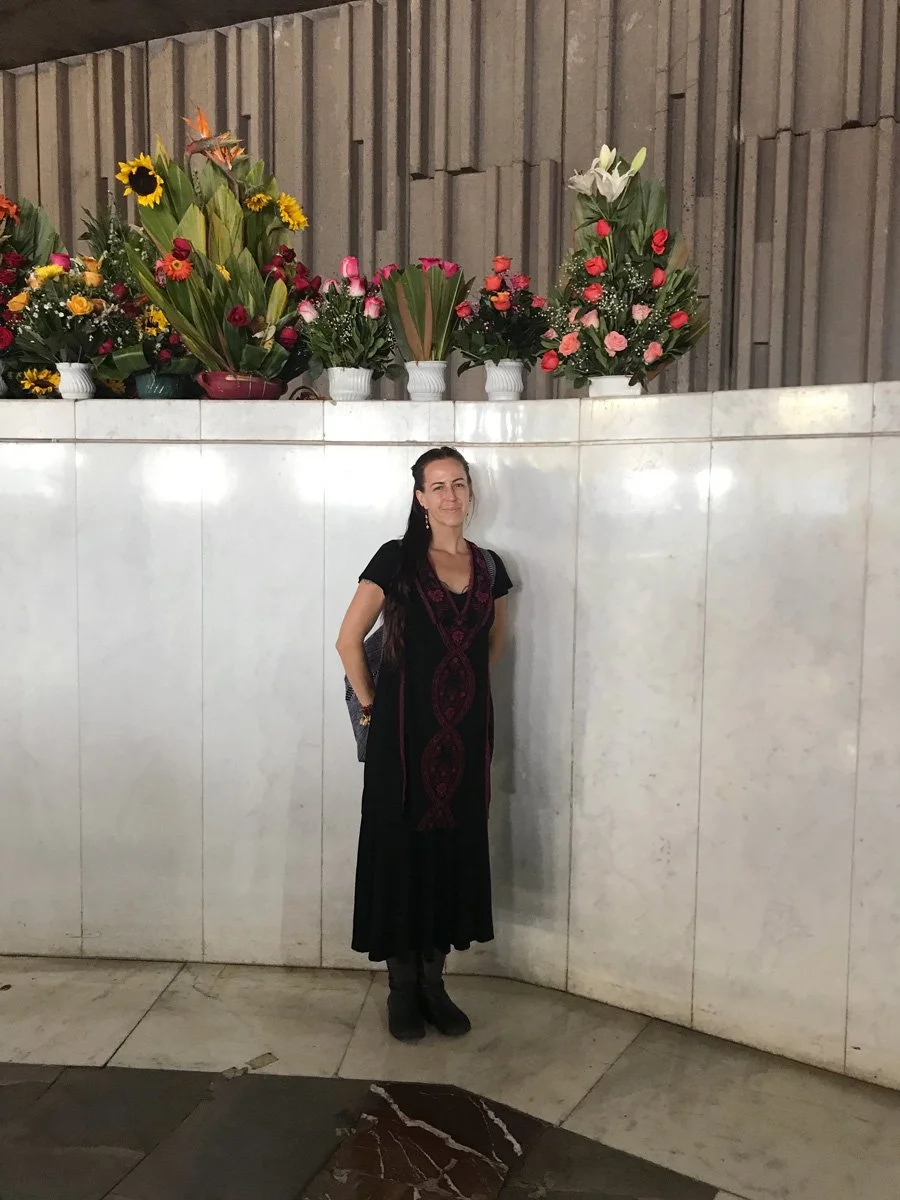
In 2019, I was honored to make a pilgrimage to the source: Tepeyac. There, on the hill where Juan Diego encountered la Virgen de Guadalupe, I stood upon the same soil that was once sacred to Tonantzin - the pre-Hispanic Earth Mother of fertility.
Tonantzin was more than just a local goddess. Her name, meaning "Our Sacred Mother" in Nahuatl, was a title of deep intimacy and respect among the Mexikha people. She was the Earth Mother—Coatlalopeuh, Cihuacoatl—the creative force of life itself, representing fertility, nourishment, and the cycles of nature: life, death, and rebirth. Her main temple at Tepeyac was a significant pilgrimage site, where people gathered to honor the source of their sustenance and their connection to the sacred land. She was not a distant figure but the mother of the people, woven into the very fabric of their daily survival and cosmic understanding.
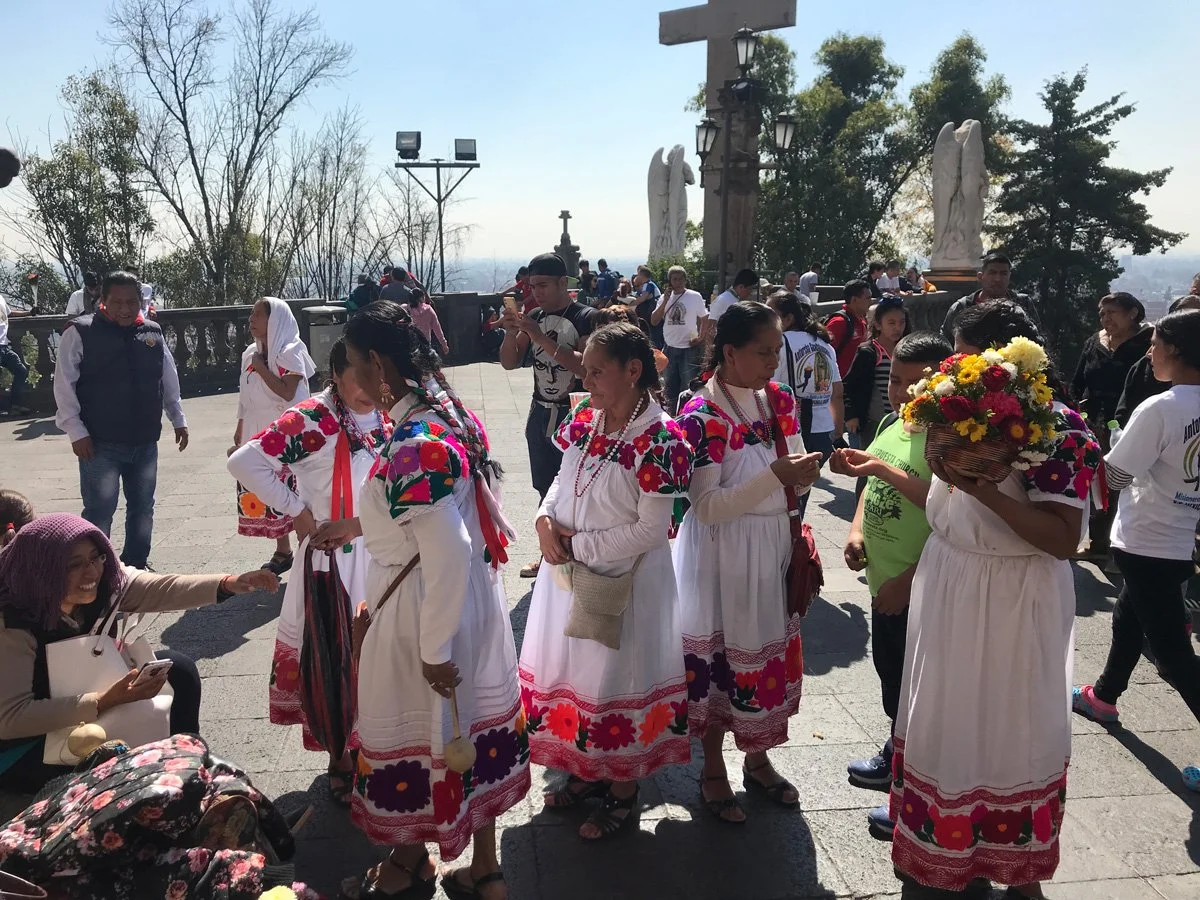
Understanding this history made the ground beneath my feet feel alive with memory.
Her ancient essence is now woven into the very fabric of Guadalupe, her symbols encrypted within the Holy Mother's ayatl (cloak). This is the great act of creative resistance: the Mexican people did not surrender their traditions. They cloaked them, hiding an ancestral world beneath the sacred symbols of Catholicism, ensuring its survival in plain sight.
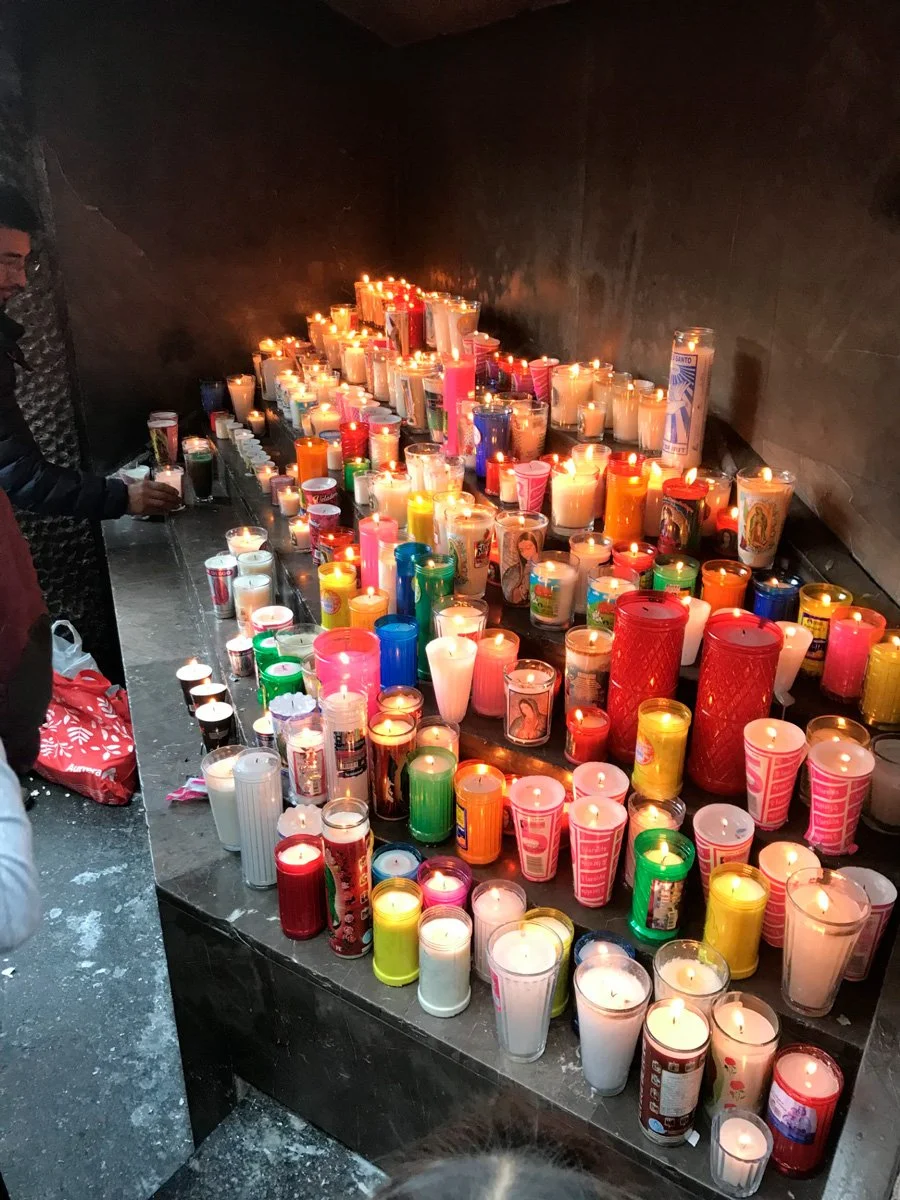
And it is a world that still breathes. I made my pilgrimage a few days before the great feast of December 12, but the energy was already electric. Hundreds of people were there, paying their respects. We held our own ceremony before entering the temple, bringing offerings in exchange for prayers. A profound peace washed over me as I thought of the thousands of faithful pilgrims traveling long distances, some crawling on their knees for miles, crying, and asking for a miracle. I have never met more humble, devoted people.
What is it that calls us so deeply? What is this reverence, this unfathomable love? 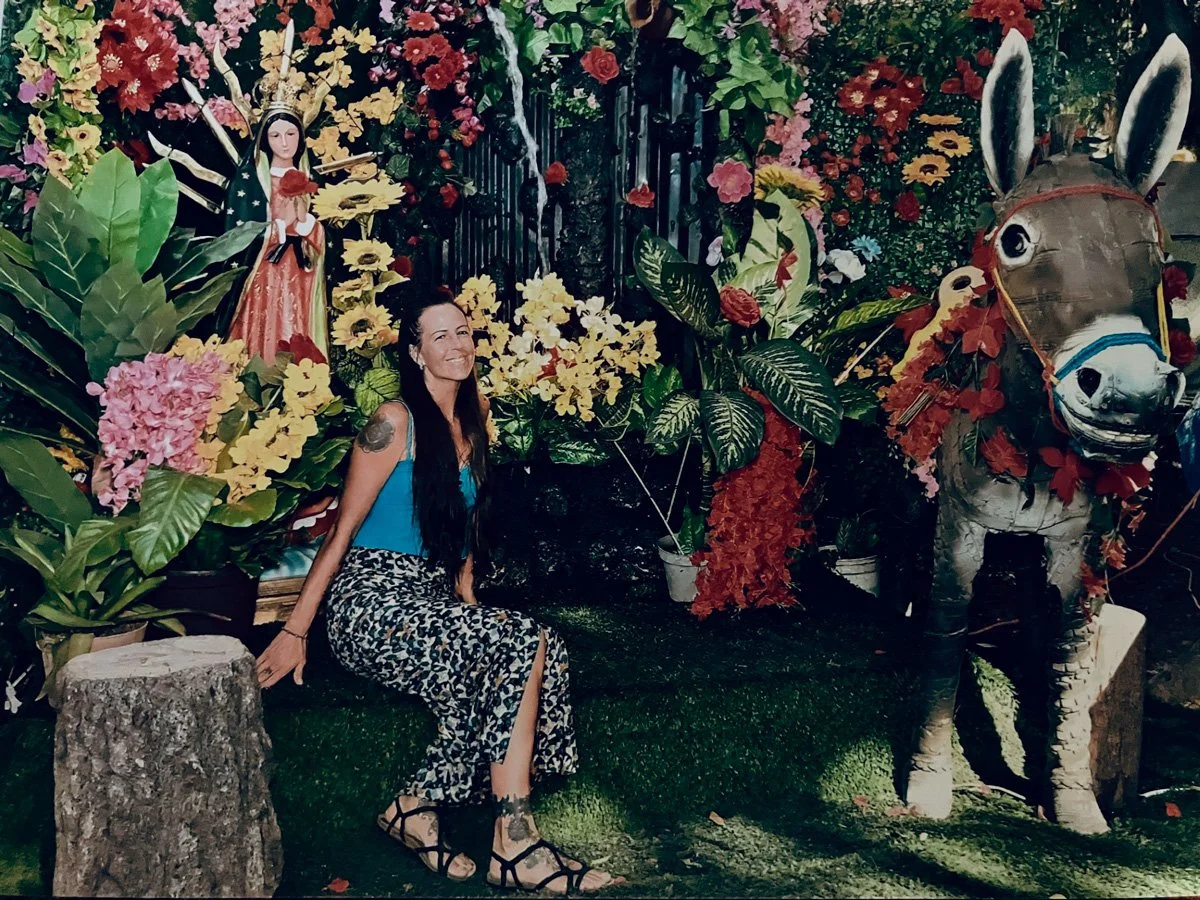
To venerate our Holy Mother is to touch the essence of “mother” in all its forms. She is creation, sustenance, solace, and fierce protection. For those who never knew a mother’s embrace, or whose earthly bonds were broken, she becomes that relationship, a constant, divine presence whose love asks for nothing but faith in return. And she does not live only in heaven or on some distant hill. She lives, fervently and undeniably, within countless hearts, right here on earth ✨
¡Viva la Reina del Cielo!
🌹 Con mucho amor 🌹
✛ Siempre, tu hija ✛